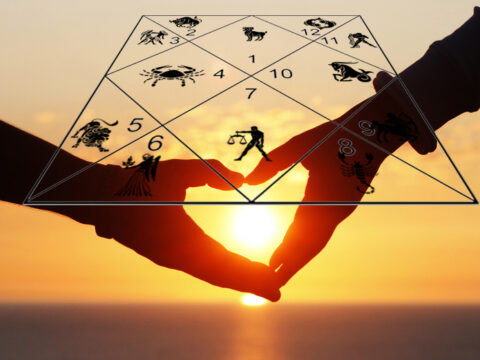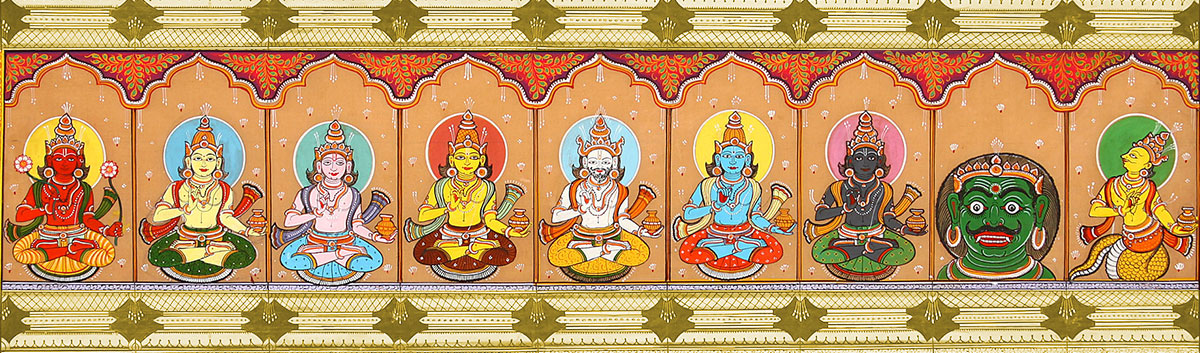
This is an introduction to the eight-sign zodiac called Kālachakra.
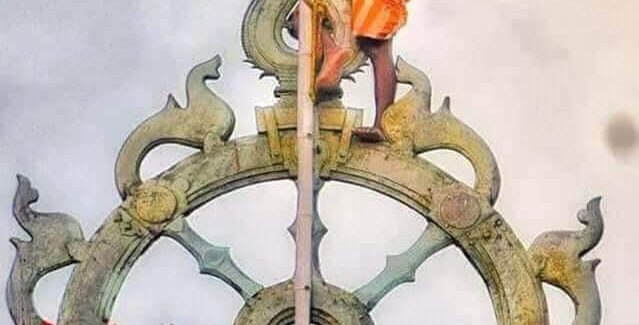
Aṣṭadala Padma (Eight petal lotus) is the foundation of Hindu philosophy. It is based on the Kālachakra (wheel of time), which is composed of eight spokes and has the 28 constellations distributed in these spokes. Each of these spokes is in one of the cardinal or intermediate directions and is reckoned starting from the east and moving in the clockwise direction. Based on this we have the aṣṭadala padma and the aṣṭa-maṅgala kriyā[1].
Have you ever wondered why the order of the weekdays is ‘Sunday, Monday, Tuesday, Wedneday, Thursday, Friday and Saturday? The clue lies in Hora. It is the basis for determining the order of the weekdays.
List the planets on the basis of their average speeds or in the order of their dwipa (ellipsoidal orbits around the earth in the Bhu-Mandala). If we consider a heliocentric system then the speed of the Moon would be the highest followed by the order of the planets in their distance from the Sun i.e. Moon, Mercury, Venus, Earth, Mars, Jupiter and Saturn. Here the Moon is the only satellite that is included as we are concerned with bodies influencing the earth by proximity or light.
| Start LMT | Hora | Sunday | Monday | Tuesday | Wednesday | Thursday | Friday | Saturday |
| 6 AM | 1 | Sun | Mon | Mar | Mer | Jup | Ven | Sat |
| 7 | 2 | Ven | Sat | Sun | Mon | Mar | Mer | Jup |
| 8 | 3 | Mer | Jup | Ven | Sat | Sun | Mon | Mar |
| 9 | 4 | Mon | Mar | Mer | Jup | Ven | Sat | Sun |
| 10 | 5 | Sat | Sun | Mon | Mar | Mer | Jup | Ven |
| 11 | 6 | Jup | Ven | Sat | Sun | Mon | Mar | Mer |
| Noon | 7 | Mar | Mer | Jup | Ven | Sat | Sun | Mon |
| 1 PM | 8 | Sun | Mon | Mar | Mer | Jup | Ven | Sat |
| 2 | 9 | Ven | Sat | Sun | Mon | Mar | Mer | Jup |
| 3 | 10 | Mer | Jup | Ven | Sat | Sun | Mon | Mar |
| 4 | 11 | Mon | Mar | Mer | Jup | Ven | Sat | Sun |
| 5 | 12 | Sat | Sun | Mon | Mar | Mer | Jup | Ven |
| 6 | 13 | Jup | Ven | Sat | Sun | Mon | Mar | Mer |
| 7 | 14 | Mar | Mer | Jup | Ven | Sat | Sun | Mon |
| 8 | 15 | Sun | Mon | Mar | Mer | Jup | Ven | Sat |
| 9 | 16 | Ven | Sat | Sun | Mon | Mar | Mer | Jup |
| 10 | 17 | Mer | Jup | Ven | Sat | Sun | Mon | Mar |
| 11 | 18 | Mon | Mar | Mer | Jup | Ven | Sat | Sun |
| M.N | 19 | Sat | Sun | Mon | Mar | Mer | Jup | Ven |
| 1 AM | 20 | Jup | Ven | Sat | Sun | Mon | Mar | Mer |
| 2 | 21 | Mar | Mer | Jup | Ven | Sat | Sun | Mon |
| 3 | 22 | Sun | Mon | Mar | Mer | Jup | Ven | Sat |
| 4 | 23 | Ven | Sat | Sun | Mon | Mar | Mer | Jup |
| 5 | 24 | Mer | Jup | Ven | Sat | Sun | Mon | Mar |
Write down the Hora/hour lordships starting with the Sun for Sunday in the order of slowest to fastest as at (2) above, for every hour and we find that after completing the lordship of 24 hours of Sunday, the lord of the 25th hour which is the first hour of the next day is the Moon. Now, the lord of the first hour shall be the lord of the day, so the day following Sunday shall be Monday as the Moon lords the first hour of the second day.
Similarly, we do the exercise of writing the lordships of the 24 hours of Monday and lord of the 25th hour of Monday is also the lord of the first hour of the next day which is Mars. Hence the day following Monday shall be Tuesday (Mars-day) as it lord the first hour of the third day.
In this manner we derive the list of the weekdays as Sunday (Suns-day), Monday (Moon-day), Tuesday (Tyers-day or Mars-day), Wednesday (Wodens-day or Mercury-day), Thursday (Thor or Jupiter-day), Friday (Frei or Venus-day) and Saturday (Saturn-day).
Note the following:
The order of the days in the week is obtained based on the lordship of the first hour of the day. This is an important concept in Jyotish. Remember the following:
Illustration: Determine the Lord of birth Hora for a person born at 9:15’ PM IST at Sambalpur, India (21N28’, 84E01’). Standard time zone for India (82E30’)
Answer: The day of birth was Wednesday (Ruler: Mercury)
It maybe noted that for longitudes east of the time zone, the starting time shall be before 6 AM whereas for longitudes west of the time zone, the starting time shall be after 6 AM.
Use of Hora
1. The Hora has a direct influence on the houses and this knowledge is extensively used by the intelligent astrologer in planning his activities.
2. All activities started during the Hora ruled by the Lord of the related Bhava (House) in the birth chart shall surely fructify.
3. Similarly, activities started during the Hora of the Badhakesh from the concerned Bhava shall suffer obstruction and activities started during the Hora of the Rogesh (8th Lord) from the concerned Bhava shall suffer annihilation
Assignment & Tasks
1. Determine the Hora at the time of birth in your horoscope. Do the houses ruled by the Lord of the Hora have any special significance in your life?
2. Write a project or report concerning your work starting during the Hora of the Lord of the tenth house in your chart. Make a chart for the moment of starting this work. Evaluate the results after 6 months of completion of the project/ report.
3. Draw the chart for the swearing-in time for the President/ Prime-Minister of your Nation and determine the Hora Lord, Masadhipati and Varsheswara i.e. lords of the hour, month and year. Does this have any link to the main activity or focus of the Government during its tenure? Highlight the results and failures related to the houses ruled by the Lord of the Hora. Can you relate the success and failures to the relationship between the Lord of the tenth and the Lord of the Hora? You can use Argala, Drishti etc, to stress your points.
4. Will you ever write a book or teach Jyotish? If so, during which Hora should you give the Guru Mantra to your students? Does this have a link to the Bhava or the Arudha Pada of the Bhava?
5. You would like to buy a new house. Which Hora would be most suitable to negotiate for the house? On which day should you step into the new house?
6. On which day/Hora should you look up a doctor?
7. Which is the best day for you to see his Jyotish? If the Jyotish only gives appointment to people on weekends (Saturday/ Sunday), then which time is most suitable?
8. You had asked for an interview and the date given is very inauspicious, say it is ruled by the Lord of the 8th house. The time also seems to be most inauspicious. What would you do?
9. Your spouse has asked for a divorce and has walked out of the house. You don’t want to break the marriage. What would you do?
[1] Thus if a person wants his watch to show the Local time at Sambalpur, India then he has to move the minute hand ahead by about 6 Minutes.
[2] In other words when the watch (adjusted to Indian Standard Time) shows 5:53’:56”, the Local time at Sambalpur, India would be 6:00’:00” AM.
If instead we consider a geocentric system, then the same order will prevail except that the Sun will replace the earth as the relative speed of the earth will be the same as that of the Sun. Then the order of the planets based on speed in a geocentric system is
The Sun is the king of the solar system and hence shall rule the first day and the first hour of the first day. Accordingly, the table of hora or lordship of the planets over the 24 hours of the day on the basis of slowest to fastest is given in the following table.
Join the Forum discussion on this post
Yashoda annd Swati’s question wrote:
Hare Rama Krsna, I was listening to Atri classes on Jagannatha drekkana , where Sanjayji talks about Agasthya is related to Bhramarishi ( chara rashis, 9th from sthir rashis Moon ), Doorvaasa is related to Maharishi (sthira rashis, 9th from dwija rashis Moon), Narada is connected to devarishi (dwija rashis, 9th from chara rashis Moon)
In contrast to this, in the narayana dasha book, it is given other way round, as Agasthya related to Maharishi (sthira rashis) and Doorvaasa is related to Bhramarishi (chara rashis). Can you please help me clear this confusion .
Let us get the linkages to get to the bottom of the subject at hand.
Defining the titles of a Rishi
There are many prefixes added to Rishi to indicate their status or working levels. Brahmarshi is the name *Brahma* prefixed to show the creative process which starts with AUM and Jagannath, and the three Rishi’s for this knowledge that we all have are Gotama, Atri and Bharadwaj, the givers of AUM for which they are called Brahmarsi. So not the creative process with A-U-M has become threefold having A, which is Brahma; U which is Vishnu and M which is Shiva. Maharsi are the ten seers of maharloka who are progenitors of all creation after a pralaya and when the creation beings again! So Maharsi is working as Brahmarsi at Maharloka.
There are so many prefixes that can create some confusion as you can see above. Therefore, following in the holy footsteps of Parasara [Vishnu Purana] we arrive at the three basic titles of Brahmarsi, Maharsi and Devarsi. Do you recall my witing about creation and the two words we learnt i.e. how A-U-M becomes U-M-A due to the reversal effect.
Look at the Rishi’s from the viewpoint of their creation and attachment -
(1) Agastya is known for his enormous creativity, having created the languages, scripts and incorporated the entire vedic literature into the south indian languages. Agastya was also known for his strength and he ate up and digested some rakshasa (demons) in a *tit for tat* kind of episode. He drank up the ocean when thirsty and fishes leapt around crying for life! None knows medicine better than him nor the ways to handle poison (Rk Veda etc).
(2) Durvasa is known for his terrible temper and thousands of disciples whom he taught and kept under strict disciplene – only Shiva could have done this. He is incarnated from the blessings of Shiva to Atri Muni. But Atri Muni is the giver of the AUM, and specifically the middle syllable U in the order of Gotama, Atri, Bharadvaja.
(3) Devarsi narada is a son of *Brahma* (so if we take birth as the factor) then some will argue that he should becalled Brahmarsi, but unlike manmatha and Rudra, he decided to remain celibate and thus left the path that Brahma wanted him to take and stuck to Narayana…like glue. So there is no doubt that he is the devarsi.
Teachings of Parasara in BPHS
Extracts from Brhat Parasara Hora Shastra
![]()
The translation of the word *parivritti* and *trayam* has been done differently by different authors to suit their purposes and in reality this is quiet encompassing. Just for good record, there is a drekkana chart which is called Parivritti Drekkana and is quite well known and accepted. You can check Tajik Nilakanti and my writings and those of the scholar Iranganti Rangacharya on this subject as well as that of Dr. B V. Raman.
The common understanding for parivritti is to “consider or cover the entire zodiac span of 360 degrees” based on its meanings as (1) “turning or a revolution” around the zodiac, (2) “return (into this world)” and (3) “surrounding , encompassing or covering” the zodiac. The word *trayam* means three or three-fold and to this there can be no dispute nor different opinions. Therefore, drekkana is the one-third part of a sign reckoned in such a way that it covers the entire zodiac of 360 degrees. There are four ways in which this can be done and are popularly called (1) Parashari drekkana (2) Jagannath drekkana (3) Somanath Drekkana and (4) Parivrittitraya drekkana, although from the exact writings of Parasara, it is quite evident that he has covered all these in his broad statement at sloka 7.
Sva is self, first sign or the same sign; panca means fifth and navama means ninth; it is evident that the first, fifth and ninth signs, in that particular order, are being advised from every sign. Krama means to step or move in a procedure. Therefore, the first, fifth and ninth signs from any sign are the three drekkana and based on this sloka 8 and the name Parasari drekkana has been given to the generally well known drekkana or decanate chart. For example, the three decanates measuring 10deg each for Leo would map to Leo, Sagittarius and Pisces respectively for the 1st (0 -10 deg) 2nd (10 deg – 20 deg) and 3rd (20 deg – 30 deg).
Next he says that Narada, Agastya, Durvasa (in that order) are the lords (poor translation of isa but will do for now) for chara (movable) and OTHERS. Should we interpret others as chara, sthira (fixed), dvisvabhava (dual or mutable) which is normally done? Then, Narada is the Rishi for movable signs, Agastya for fixed signs and Durvasa for mutable signs.
Logical derivation based on Birth and BPHS and dharma bhava
If we take the lineage or birth then this can easily fall in place – (1) Narada was the son of Brahma and hence movable signs are given to his care as Brahma indicates creation for which the movable signs have the energy or guna (2) Agastya, the ardent worshipper of Rudra/Shiva was the son of Rishi Pulastya and the fixed signs with low energy attributed to their fixity represents thes guna while (3) Durvasa was the son of Atri muni who is the giver of the middle syllable ‘U’ in AUM which represents the energy of Vishnu. Therefore this explanation fits the description.
However, we need to realize that the Rishi are actually the Pitris as they are the progenitors of all creation (and knowledge – Veda) and must have the pride of place in the ninth house to represent the Guru and father alike. Then when we say narada rules of the movable drekkana we refer to him as being in the ninth from the movable signs. The ninth from movable signs are the mutable (dual) signs which are having the energy of sustenance and therefore Narada is called Devarsi. By similar logic we can attribute the ninth from fixed signs (which are movable signs) to Agastya as he has a created whole universe of knowledge like Brahma. Similarly the ninth from mutable signs are the fixed signs and the anger of Durvasa matches this.
If we map ‘Devarsi to Vishnu, Brahmarsi to Brahma and Maharsi to Mahadeva or Shiva, then from the above paragraph, we can map Narada as Devarsi, Agastya as Brahmarsi and Durvasa as Mahrsi. That should explain in detail what I was teaching at the Atri-SJC class in Delhi.
(1) Devarsi – Narada –Mutable or dual signs [logic: being 9th from movable signs]
(2) Brahmarsi –Agastya –Movable signs [logic: being 9th from fixed signs]
(3) Maharsi –Durvasa –Fixed signs [logic: being 9th from mutable/dual signs]
The vexed questions
All this is fine and we should follow but then a stage comes when we ask questions like what does the word ‘krama’ fully mean? Is it just regular reckoning like that for Saturn or is it based on the reckoning of Narayana? Then we arrive at a dilemma where the ninth sign from the samapada and vimsapada are going to be different. Then for Narayana dasa which is based on padakrama order, the reckoning of results of houses should also follow a different order for samapada and vimsapada signs. For this we go back to the two words “AUM” and “UMA” which hold the key to the answer. Again, the word used by Parasara is ‘chara and others’ which for the intelligent should cover both the groups of samapada and vimsapada signs. Therefore Narayana dasa is a different level of Jyotish altogether and should be studied with at least some knowledge of the Upadesha Sutra. Add to this the complexity of the word ‘parivritti-traya’ and the various alternatives to get a great puzzle that would require serious research to resolve.
Let us just focus on the question at hand. Look at it from another perspective of guna and drishti which is an attribute of the signs. We already have the following mapping -
(1) Devarsi – Narada –Mutable or dual signs [logic: being 9th from movable signs]
(2) Brahmarsi –Agastya –Movable signs [logic: being 9th from fixed signs]
(3) Maharsi –Durvasa –Fixed signs [logic: being 9th from mutable/dual signs]
When we talk of Narayana dasa, we talk of sustenance of everything that is created by Him. In the material universe, Guna is understood from the viewpoint of energy as well.
(1) Satva can be simply understood as perfect balance between energy supply and demand and thus the body continues in perfect or balanced motion. Satva guna is attributed to mutable or gual signs
(2) Rajas guna is the desire and hence power to create and shows the use of surplus energy which is available with movable signs. Rajas guna is attributed to movable signs and will continue to keep working or doing till the energy finishes. Thus, Rajas ends in Tamas guna when the fuel supply finishes.
(3) The reverse is true for Tamas guna which has no power or energy to do anything and is seeking energy to get activated and achieve its goals. Tamas is attributed to the fixed signs which symbolise lack of motion and low energy.
Now rewrite the mapping based on gunas
(1) Devarsi – Narada –Mutable or dual signs –satva guna
(2) Brahmarsi –Agastya –Movable signs –rajas guna
(3) Maharsi –Durvasa –Fixed signs –tamas guna
The desire is indicated by RASI DRISHTI or the aspect of the signs.
(1) The dual/mutable signs aspect each other or satva guna is satisfied in itself, and satva converts only to another satva because of this drishti. [satva –> satva]
(2) Movable signs aspect only fixed signs and cannot aspect any movable or mutable signs showing that rajas converts to tamas guna because of this drishti. [rajas –> tamas]
(3) Fixed signs only aspect other movable signs and cannot aspect fixed or mutable signs showing that tamas converts to rajas but cannot convert ot satva because of this drishti. [tamas –>rajas]
Q1. Why are we taking drishti into account? Answer: Because it shows the knowledge, desire and action towards things/objectives.
Q2. Why are we considering Rasi drishti? Answer: Because it does not have Iccha shakti and instead has only kriya and gyana shakti. That is why it doesnot
And, in Narayana Dasa or in Drig dasa, this connection between drishti (knowledge, desire and action ability) and ninth house (Narayana/Vishnu) is clearly made and has a sound basis on the Rk Veda – tad Vishnu paramam padam, sadaa pasyanti suurayah. Diviivah chayur-aatatam.
The next step is to covert on the basis of the guna. Satva (Devarshi) remains the same and no conversion occurs. Rajas (Brahmarsi) is converted to Tamas (Maharsi) and vice-versa.
(1) Devarsi – Narada –Mutable or dual signs –satva guna –> satva guna –Mutable or dual signs–Narada [Rishi is not changing, dominant guna is not changing]
(2) Brahmarsi –Agastya –Movable signs –rajas guna –> tamas guna – Fixed signs –Maharsi –Agastya [Rishi is not changing, dominant guna changes, and thus the sign association changes]
(3) Maharsi –Durvasa –Fixed signs –tamas guna –> rajas guna – Movable signs – Brahmarsi –Durvasa [Rishi is not changing, dominant guna changes, and thus the sign association changes]
Now for the purpose of Narayana dasa, Drig dasa and every where we use rasi drishti, we should remember this changing of guna and accordingly in the Narayana dasha book, it is given as Agasthya related to Maharishi (sthira rashis) and Durvssa is related to Bhramarishi (chara rashis)
Join the Forum discussion on this post
Introduction- The houses
Before venturing into the study of the finances of a nation we should be clear about the indications of the houses in the chart.
In deva prasna (i.e. questions bearing on deities, the twelve houses signify (1) Divine presence, (2) wealth, (3) temple servants, (4) vehicles (5) image, idol, picture or symbol like an alter, (6) enemies, (7) ornaments, (8) offerings, oblations of five or sixteen kinds, (9) temple authorities, (10) festivals, (11) income and (12) expenditure. There are other opinions in this regard and the most accepted views have been reconciled and are at table-1
Table 1: House significations
| House | Deva praśna | Rāja praśna | ||
| Coronation | Rāja bhāgya | National chart | ||
| 1 | Deity, well being & satisfaction, temple building and idol, alter, picture etc. | The King | The King | The nation, constitution, ideals |
| 2 | Wealth, income, treasure, guardians | Treasury | Prince & princess | Wealth, treasury, currency |
| 3 | Temple servants, Offerings (to deity) | Armed forces & their chief | Treasury | Armed forces & their chief, servants |
| 4 | Lands, property, vehicles | Vehicles, property | Vehicles & followers | Vehicles, property |
| 5 | Divine presence and the symbols, idols, etc. | Ministers, advisers | Palace | Ministers, Officials wielding delegated powers |
| 6 | Pollution, enemies, thieves | Enemies, thieves | Wife(s) | Enemies, disease |
| 7 | People, worshippers, ornaments | War manoeuvre | Advisers & preceptors | Public |
| 8 | Offerings (by people), good or evil | Life of government | Subjects | Donations, aid, life of nation |
| 9 | Authorities and merits | Policy and attitude | Policy and attitude | |
| 10 | Daily ceremonies, festivals etc. | Administration | President, Prime minister and Administration | |
| 11 | Merit, prosperity, income | Gains, income | Gains, income | |
| 12 | Expenditure, waste, āchārya, tāntrika, priest | Losses, expenditure | Losses, expenditure | |
The nation is alive and full of living beings that constitute its living body. Unfortunately man has evolved so much as to accord an equal status to other living creatures that have accepted his leadership, but it goes without saying that the trees and animals living in the boundaries of a modern nation-state belong to it. The divine presence is represented in the hearts of all creatures and a study of the houses in deva praśna gives us an idea of defining the signification of houses for a modern nation-state.
There can be various dates and times defining the stages of evolution of an area into a nation-state. Of these, the Independence Day marks the birth of the nation. The house significations given in the last column of table-1 shall apply to such a chart.
Every other event following the declaration of independence is a part of the evolutionary process. Of these the most important event is the coronation of a king, oath taking of the chief executive (President or Prime minister) or the declaration of a dictator. The house significations given under the column titled ‘coronation’ shall apply to such charts. Questions bearing on the personal life of the head of state and his functioning should be seen from the column titled ‘Rāja bhāgya’ or fortune of the ruler.
Table 2: Charakāraka & bhāva
| House | Modern astrologers | Parāsara | Rath |
| 1 | Ātmakāraka | Ātmakāraka | Ātmakāraka |
| 2 | Amātyakāraka | Dārākāraka | Dārākāraka |
| 3 | Bhrātṛkāraka | Bhrātṛkāraka | Bhrātṛkāraka |
| 4 | Mātṛkāraka | Mātṛkāraka | |
| 5 | Putrakāraka | Putrakāraka | Putrakāraka |
| 6 | Jñātikāraka | Jñātikāraka | |
| 7 | Dārākāraka | Dārākāraka | Dārākāraka |
| 8 | Ātmakāraka | ||
| 9 | Pitṛkāraka & Bhrātṛkāraka | ||
| 10 | Amātyakāraka | ||
| 11 | Bhrātṛkāraka | Bhrātṛkāraka | |
| 12 | None |
The (1) Sun, (2) Jupiter, (3) Mars, (4) Moon, (5) Jupiter, (6) Mars, (7) Venus, (8) Saturn, (9) Jupiter, (10) Mercury, (11) Jupiter and (12) Saturn are the naisargika kāraka for the twelve houses. Parāśara gives the above list of the primary natural significators. There are other secondary natural significators for some of the houses as given in the classical Jyotiṣa literature. These include Mercury (learning) for the fourth house; Saturn (disease) for the sixth house; Sun (father) for the ninth house; Sun (work), Saturn (effort) & Jupiter (success) for the tenth house.
In this paper we shall examine the finances of a few modern nation states using the houses and the Nārāyaṇa daśā as a tool to accurately time the events. In addition to the above, the regular significations of the houses and planets should be borne in mind while examining the charts.
Chart 1: Indian Independence
India was declared independent on 15 Aug 1947 along with other nations in the Indian subcontinent. Rāhu (foreign influence) is in lagna indicating that the constitution shall be largely borrowed from foreign countries and the modern nation-state shall attempt to imbibe the best from all other nations.
Table 3: Narayana Dasa of India
Ta: 1947-08-15 (0:01:00) – 1949-08-14 (12:25:05)
Sg: 1949-08-14 (12:25:05) – 1959-08-15 (1:44:30)
Cn: 1959-08-15 (1:44:30) – 1971-08-15 (3:38:56)
Aq: 1971-08-15 (3:38:56) – 1978-08-14 (22:34:34)
Vi: 1978-08-14 (22:34:34) – 1980-08-14 (11:00:00)
Ar: 1980-08-14 (11:00:00) – 1982-08-14 (23:17:28)
Sc: 1982-08-14 (23:17:28) – 1989-08-14 (18:17:25)
Ge: 1989-08-14 (18:17:25) – 1990-08-15 (0:22:41)
Cp: 1990-08-15 (0:22:41) – 1996-08-14 (13:23:17)
Le: 1996-08-14 (13:23:17) – 1997-08-14 (19:31:44)
Pi: 1997-08-14 (19:31:44) – 2002-08-15 (2:10:19)
Li: 2002-08-15 (2:10:19) – 2011-08-15 (9:34:50)
Ta: 2011-08-15 (9:34:50) – 2021-08-14 (23:04:25)
Sg: 2021-08-14 (23:04:25) – 2023-08-15 (11:20:14)
Cn: 2023-08-15 (11:20:14) – 2023-08-15 (11:20:14)
Aq: 2023-08-15 (11:20:14) – 2028-08-14 (18:16:25)
Vi: 2028-08-14 (18:16:25) – 2038-08-15 (7:33:10)
Ar: 2038-08-15 (7:33:10) – 2048-08-14 (21:09:25)
Sc: 2048-08-14 (21:09:25) – 2053-08-15 (3:56:42)
Chart 2: USA Independence (144 year)
…other charts were discussed
Join the Forum discussion on this post
There are two methods to draw a Trimsamsa (D30) Chart. We discuss the method of Parashara.
What is the Trimsamsa, and how to draw a Trimsamsa Chart?
Trimsamsa means the one-thirtieth portion of a sign measuring one degree. Unlike other divisions, the Sun and Moon are not the Lords of any trimsamsa and the Nodes (Rahu & Ketu) also do not owm any trimsamsa. Thus the remaining five of Mars, Mercury, Jupiter, Venus and Saturn own the trimsamsa. They represent the five elemental states of existence (see table 1).
Table 1: Five Elements
| Element | Planet | State | Tithi | Days |
| Prithvi | Mercury | Earth/Solid state | Bhadra Tithi: 2nd, 7th & 12th | Wednesday |
| Jala | Venus | Water/ Liquid state | Rikta Tithi: 4th, 9th & 14th | Monday & Friday |
| Agni | Mars | Fire/Energy | Nanda Tithi: 1st, 6th & 11th | Tuesday, Sunday |
| Vayu | Saturn | Wind/ Gaseous State | Poorna Tithi: 5th, 10th & 15th | Saturday |
| Akash | Jupiter | Ether/ Vacuum | Jaya Tithi: 3rd, 8th & 13th | Thursday |
Table 2: Trimsamsa D30
| Degrees | Odd Signs | Deity | Degrees | Even Signs | Deity |
| 5 | Aries | Agni | 50 | Taurus | Varuna |
| 10 | Aquarius | Vayu | 120 | Virgo | Kubera |
| 18 | Sagittarius | Indra | 200 | Pisces | Indra |
| 25 | Gemini | Kubera | 250 | Capricorn | Vayu |
| 30 | Libra | Varuna | 300 | Scorpio | Agni |
The positions of the planets and the Lagna in the Rasi chart are used to determine the Trimsamsa occupied by them. For example, if Jupiter is in 26-07′ in Pisces, then since it is in an even sign, from Table 2, we see that it is in Scorpio (even sign ruled by Mars). In this manner, the trimsamsa of all the planets and Lagna is determined and the resultant chart is called the Trimsamsa or D-30 Chart.
The trimsamsa chart of the standard nativity is given below.
How to study the Trimsamsa Chart? Method-1
1. Treat this like any other chart. In spiritualism we are taught of a “SHADOW SELF” called PAPA_PURUSHA which is a reflection of our own self, but the darker side which includes all the negative things we have done for ages and many births. This is the trimsamsa..the shadowy world of our self. Hence, the Sun and Moon do not own any trimsamsa as they have light.
2. Second thing is to study this chart for all the bad things we have done for which we deserve to be punished or taught lessons. The 12th rules hospitals and is the 5th (Mantra) from the 8th (Diseases). Hence the 12th house shows the way to get out of diseases and other such bad karma. It is the future (5th) of the 8th house.
3. A Saturn placed in such a place is not good as it delays the recovery from diseases, makes the effect of the mantra nil due to mistakes or “NOT WORSHIPPING GANESHJI” before starting a mantra can render it useless unless Guru is very strong. In this manner study the houses with focus on the 8th house (ROGA: Diseases & RINA Debts) and the 6th house (SHAD RIPU: Six kinds of weaknesses). In this manner the houses should be studied.
4. The 9th house (Dharma) from the 8th house is the 4th house. Thus, happiness and laughter (ruled by the 4th house) are the best natural medicine to get out of the cycle of disease and debt. A clean heart is the key to happiness & laughter. Venus (fulfilment of desires) gives happiness & Mercury gives laughter. Moon is the natural significator for the 4th house and becomes the Controlling planet for good health and freedom from diseases. In this manner the planets should be studied.
5. The Arudha pada of the sixth house gives the body part that shall be afflicted due to the diseases.
6. Venus rules the Mritunjaya Mantra and the strength of Venus in this division is important for recovery from diseases. The Sun and the Moon represent the Atma (Soul) and the Mana (Mind) respectively. Affliction to the Sun will result in suffering, poverty and misery while affliction to the Moon will cause ill health and death. Since Mars and Venus rules the signs of exaltation of the Sun and Moon, they represent the Physical and Mental strength of the native to cope with distress, disease and other evils respectively.
Examine the trimsamsa of the chart above
The first, tenth and eighth houses and their lords should be examined for good longevity. Here, the Lagna lord is involved with a Parivartana Yoga with the ninth lord Mars showing the ability for quick recovery from diseases. The conjunction of saturn is a big handicap on the lagna lord as if saturn conjoins either of the lords of the lagna (Brahma), tenth (Vishnu) and eighth (Rudra), then the span of longevity contributed by it is reduced. Jupiter is not only the lagna lord, but also the tenth lord and its conjunction by Saturn is a handicap. The exaltation of the eighth lord Venus is a great blessing in the chart as it gives cures from all ailments during its periods.
Rahu and Ketu placed in the eighth house will surely give diseases during their periods and the antidote for this is the exaltation of Venus their dispositor. During Saturn dasa-Rahu Antardasa-Ketu Pratyantar dasa, the native developed a strange swelling in the left elbow (joint diseases are shown by Saturn) that had to be surgically removed after it threatened to become dangerous.
The badhakesh is the lord of the house of obstruction (Badhak means obstruction). For movable signs the eleventh house, for dual signs the seventh and for fixed signs the seventh is the Badhak house. Here the seventh house is Virgo which is empty while its lord Mercury is in the tenth house in Sagittarius in the badhak house from the Moon. Thus, during Jupiter dasa Mercury antardasa, the native suffered from a dogbite.
The lagna rising in trimsamsa is the same as the Lagna Pisces in the Rasi chart showing that most of the ill health will be related to childhood and that the health improves with age. This is also substantiated by the placement of the tenth lord in Lagna with the lagna lord in the Rasi Chart. In this manner and applying the “Paryaya Dasa” [recommended by Maharishi Jaimini for the Shastamsa (D-6) and D-30 is a higher harmonic division of D-6 as 30=2x12+(6)] the correct results can be divined.
Join the Forum discussion on this post
It is easy to talk on religion, but difficult to practice it. If you want to go east, don’t go west.
— Śrī Ramakrishna
Standard Reading US$ 225 Vedic Reading with Pt. Sanjay Rath. Telephone or Personal meeting. Digital recordings emailed same day.
For Appointment Contact: Appointment@SRath.com
30 Minute Reading US$ 125
Vedic Reading with Pt. Sanjay Rath. Telephone or Personal meeting.
For Appointment Contact: Appointment@SRath.com
Phone Numbers to call for Vedic Reading: ![]()
America:+1-(650)-209-4770 (California); India:+91-11-45048762 (Delhi); United Kingdom: +44-020-7617-7373
Appointment: +91-9810449850 appointment@srath.com, sarbanirath@gmail.com
MUST fill and email form to VedicReading@SRath.com
PDF is not advisible unless this is for personal meeting
Rich Text Format [rtf] 143.39 Kb
Word – DOC [doc] 98.50 Kb
Word – DOCX [docx] 45.24 Kb
Portable Document PDF [pdf] 89.05 Kb