
- Introduction
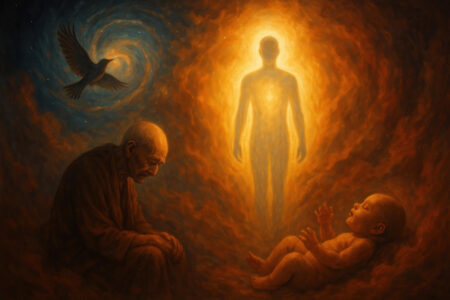 The doctrine of rebirth (punarjanma) occupies a central position in the Indian philosophical landscape. Far from being a mythic belief, it is embedded in the metaphysical, psychological, and ethical frameworks of nearly all major darśanas — including vedānta, sāṁkhya, yoga, nyāya, baudha, jaina, and kaśmira śaiva. These traditions converge on a shared insight: that consciousness (cit) is not extinguished at death, and that embodied life is one phase in a larger continuum of experiential becoming.
Modern empirical research on children’s past-life memories, such as the work of Dr. Jim Tucker, has revived scholarly interest in this doctrine. While such studies remain controversial, they resonate with long-standing Indian claims that memory (smṛti), impression (saṁskāra), and agency (karma) persist beyond a single lifetime.
- Scriptural Foundations of Rebirth
2.1 Upaniṣadic Sources
The earliest systematic articulation of rebirth appears in the Bṛhadāraṇyaka Upaniṣad, which states:
“Yathā karma yathā śrutam.”
“As one acts and as one knows, so one becomes.” (BṛU 4.4.5)
This passage establishes a causal continuity between action, knowledge, and future embodiment. The Chāndogya Upaniṣad further clarifies the mechanism:
“Sa yathākarma yathāśrutam etad evānuvijānāti.”
“According to his deeds and according to his understanding, he becomes.” (ChU 5.10.7)
Here, rebirth is not arbitrary but governed by the ethical and cognitive patterns cultivated in life.
2.2 Bhagavad Gītā
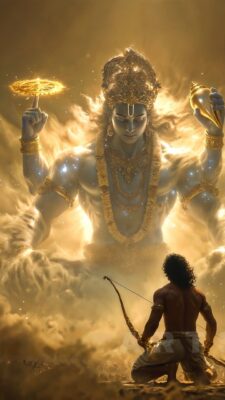 The Gītā offers one of the most succinct formulations of rebirth:
“Vāsāṃsi jīrṇāni yathā vihāya… tathā śarīrāṇi vihāya jīrṇāni.”
“As a person discards worn-out garments, so does the embodied self discard old bodies and take on new ones.” (Gītā 2.22)
This metaphor emphasizes continuity of the jīva amidst changing embodiments.
- Psychological Mechanisms: Saṃskāra and Vāsanā
Indian philosophical psychology explains rebirth through the persistence of saṃskāras — subtle impressions formed by experience. The Yoga Sūtras describe this continuity:
“Saṃskāra-sākṣāt-karaṇāt pūrva-jāti-jñānam.”
“Through direct perception of saṃskāras, knowledge of previous births arises.” (YS 3.18)
This sutra explicitly links memory traces to past-life cognition, aligning with contemporary reports of spontaneous past-life recall in children.
- Kashmir Shaivism: Rebirth as Śiva’s Self-Contraction
Kashmir Shaivism (Trika) offers a sophisticated non-dual interpretation of rebirth. Unlike dualistic models that posit a migrating soul, Trika asserts that:
- Only Śiva, the universal consciousness, exists.
- The jīva is Śiva in a contracted state (saṃkoca).
- Rebirth is the oscillation of consciousness between contraction and expansion.
Abhinavagupta writes in the Īśvarapratyabhijñā-vimarśinī:
“Citiḥ svātantryāt saṃkucyate vikāsate ca.”
“Consciousness, by its own freedom, contracts and expands.”
Thus, rebirth is not the journey of a separate soul but the rhythmic play (līlā) of consciousness assuming new forms.
The Śiva Sūtras echo this:
“Jñānaṃ bandhaḥ.”
“Limited knowledge is bondage.” (ŚS 1.2)
Bondage leads to repeated embodiment until recognition (pratyabhijñā) dawns.
- Ethical and Metaphysical Implications
5.1 Karma as the Architect of Rebirth
Across Indian traditions, karma is the causal principle shaping future births. The Gītā states:
“Karmaṇo hy api boddhavyaṃ.”
“One must understand the nature of action.” (Gītā 4.17)
Karma is not divine reward or punishment but the natural unfolding of intentional action.
5.2 Liberation from Rebirth
The goal of Indian philosophy is not merely to explain rebirth but to transcend it. The Kaṭha Upaniṣad declares:
“Na jāyate mriyate vā kadācin.”
“The Self is never born nor does it die.” (Kaṭha 2.18)
Realization of this truth ends the cycle of becoming.
- Contemporary Research and Convergence
Modern studies of children who recall past lives — particularly those documented by Ian Stevenson and Jim Tucker — provide empirical cases that parallel classical Indian claims:
- Early childhood recall
- Emotional intensity
- Verifiable details
- Disappearance of memories around age 6–7
Indian philosophy would interpret these as residual saṃskāras manifesting before the new personality fully stabilizes.
- Conclusion
The doctrine of rebirth, far from being a speculative belief, is supported by a robust philosophical, psychological, and ethical framework within Indian thought. Sanskrit sources portray rebirth as:
- A lawful process governed by karma
- A continuity of consciousness through saṃskāras
- A movement within the larger play of universal awareness
- A cycle that can be transcended through knowledge (jñāna) and recognition (pratyabhijñā)
Contemporary empirical research, though still developing, offers intriguing parallels to these ancient insights. Together, they invite a renewed scholarly engagement with the question of consciousness beyond a single lifetime.
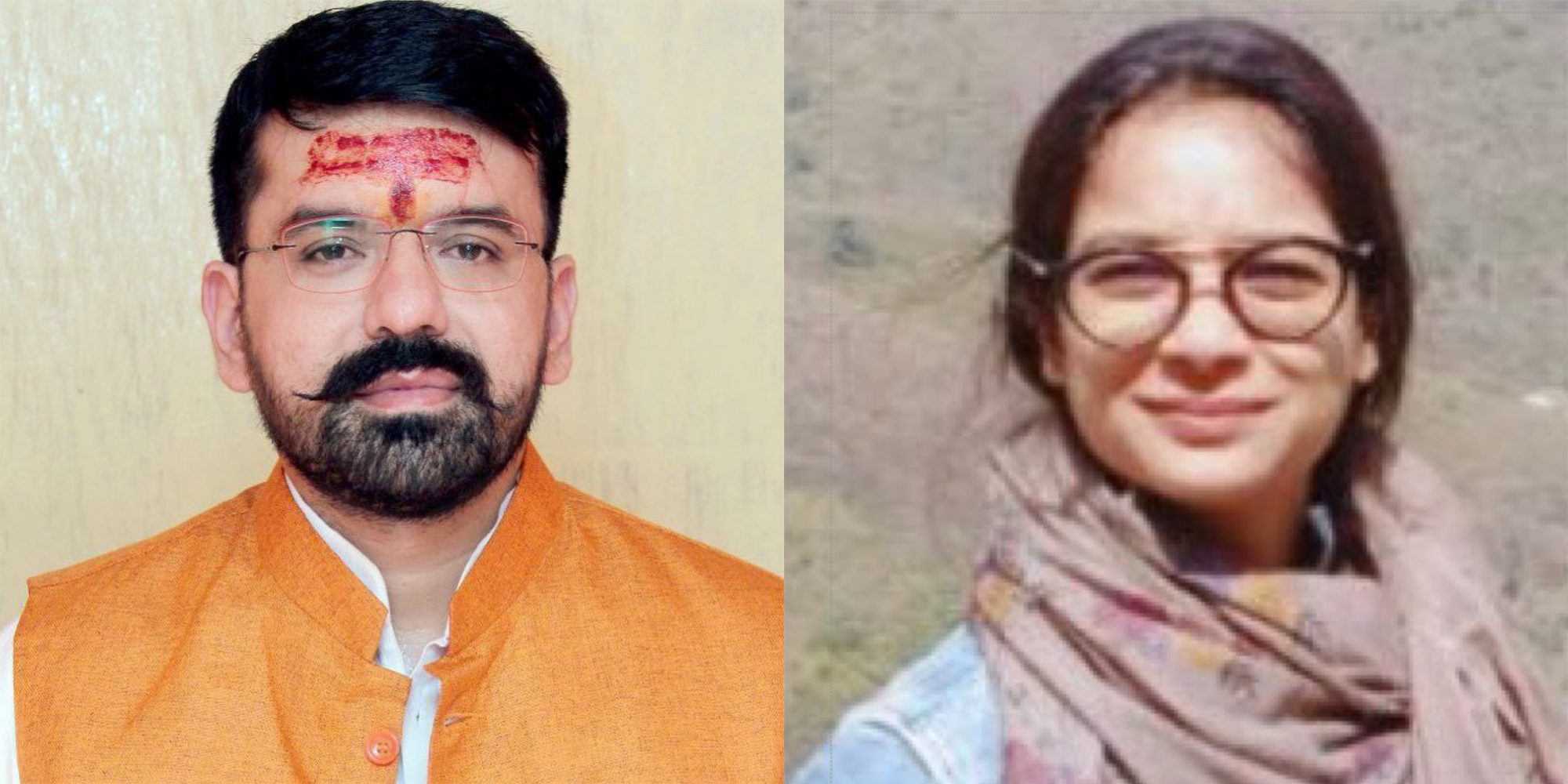 We have an excellent pandit Divākar ‘Deva’ Mishra, who is from the priests of Vindhyāvāsini Siddha Pīṭha to guide you through the hundreds of temples of Kāśi [Varanasi] and neighbouring regions. He can organise your pūjā, keep you safe and take care. He is supported by an English-speaking well-travelled spouse ‘Supriya Mishra’. Please contact them directly for any services, remedial pūjā and tours. They handled the 60+ member Kāśi Jyotiṣa Group 2022.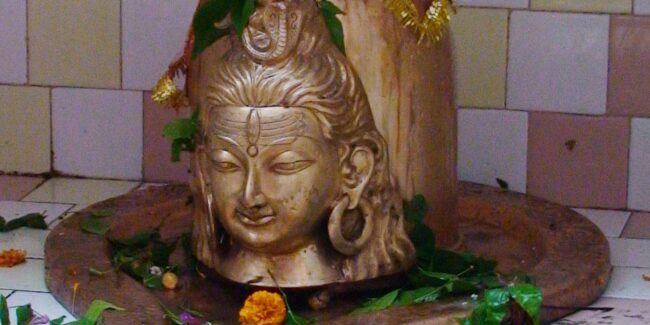

 DBC offers online courses in jyotish (Vedic Astrology) taught directly by Sanjay Rath as per the tradition, through narrated power points and other audio tools. The courses are at different levels, from the beginners through the intermediate to the advanced and are known as SoHamsa | DBC courses, with individual classrooms and assistant teachers
 Sagittarius Publications is the publisher and distributor the popular quaterly magazine the Jyotish Digest, as well as many thorough books on the subject of Vedic Astrology or Jyotish.