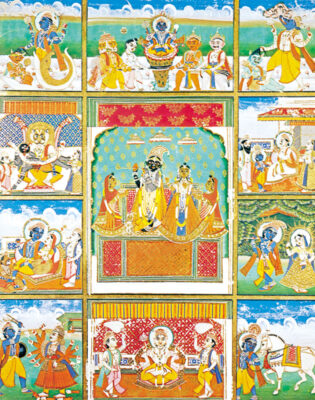
Avatāra
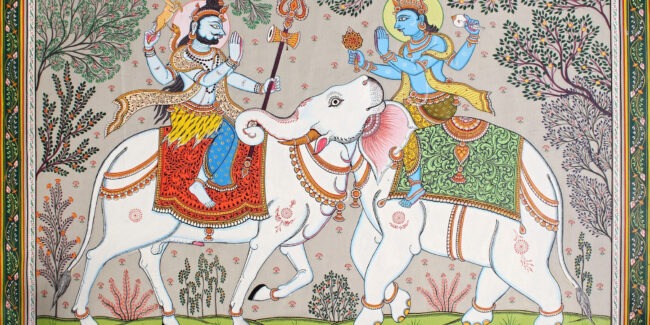
The Sanskrit word avatāraḥ is derived from ava meaning ‘down’ or descent and tarati meaning ‘crossing over or tiding over’ and refers to the deliberate descent of a deity, immortal being or the Supreme Being from heaven (normally Viṣṇu) for specific purpose(s). As a noun, avatar also means a new personification of a familiar, idea[i] like an embodiment[ii] or a temporary manifestation[iii].
God is one in Hinduism, to which there is no doubt and is represented by the sacred syllable om (ॐ).
Types of avatāra
There are six primary types of Viṣṇu avatāra or incarnations –
(1) Puruṣa avatāra: avatāra of Viṣṇu descending for the sake of upholding dharma
(2) Lilā avatāra: Viṣṇu avatāra (descending) for various ‘lila; (play, Rāma of pastimes) and include (1) Catuḥsana, (2) Nārada, (3) Varāha, (4) Matsya, (5) Yajña, (6) Nara- Nārāyaṇa, (7) Kardami Kapila, (8) Dattātreya, (9) Hayasirsa, (10) Haṁsa, (11) Dhruvapriya, or Prsnigarbha, (12) Rsabha, (13) Pṛthu, (14) Nṛsiṁha, (15) Kūrma, (16) Dhanvantari, (17) Mohini, (18) Vāmana, (19) Paraśurāma, (20) Raghavendra, (21) Vyāsa, (22) Balarāma, (23) Kṛṣṇa, (24) Buddha and (25) Kalki as given in the Bhagavata Purāṇa.
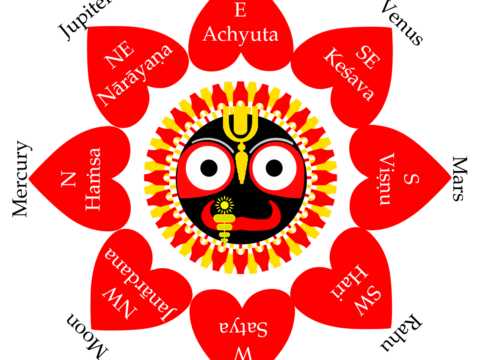
Of these, 22 incarnations are considered most crucial and protect the 22 steps (baisi pahacha) of the Jagannāth temple symbolizing the steps one has to take to achieve yoga with Jagannāth. These are (1) Catuḥsana, (2) Varāha, (3) Nārada, (4) Nara-Nārāyaṇa, (5) Kardami Kapila, (6) Dattātreya, (7) Yajña, (8) Rsabha, (9) Prthu, (10) Matsya, (11) Kūrma, (12) Dhanvantari, (13) Mohini, (14) Nṛsiṁha, (15) Vāmana, (16) Bhargava Paraśurāma, (17) Vyāsa, (18) Rāmachandra, (19) Balarāma, (20) Kṛṣṇa, (21) Buddha and (22) Kalki.
(3) Guṇa avatāra: based on the three modes of rajas, satva and tamas these are Brahma, Viṣṇu and Śiva and reside within the material creation in these modes.
(4) Yuga avatāra: viṣṇu avatāra heralding the closing of a yuga (time cycle) and ensuring the continuity of the next. In every mahayuga there are four yuga – Satya, Treta, Dvāpara and Kali bearing the primary colors white, red, black and yellow respectively[iv].
(5) Manvantāra – avatāra: Also called Manu, they are the progenitors of manuśya (human beings) at the beginning of every kalpa (day of Brahma or the beginning of creation).
(6) Saktyavesa – avatāra: jīvātmā (souls) empowered by Viṣṇu [for a short duration] during their continued existence. They are normally teachers and provide knowledge that helps to sustain mankind like Dhanvantari a jīva tattva śaktyavesa avatar Who taught ayurveda (medicine) and medicinal plants. Lord Buddha, Kapila, Ṛṣabhadeva and Nara-Nārāyaṇa are also saktyavesa avatāra as they were primarily great teachers. Recent theorists have added Jesus Christ and Hazrat Muhammad as well as Bhaktivedānta Swami Prabhupada to this list as they were also great spiritual teachers. However others have attempted to add all deities Brahma and Śiva to this list and are quite wrong in doing so as they are to be exclusively listed under guṇa avatāra.
[i] WordNet, Princeton University


 DBC offers online courses in jyotish (Vedic Astrology) taught directly by Sanjay Rath as per the tradition, through narrated power points and other audio tools. The courses are at different levels, from the beginners through the intermediate to the advanced and are known as SoHamsa | DBC courses, with individual classrooms and assistant teachers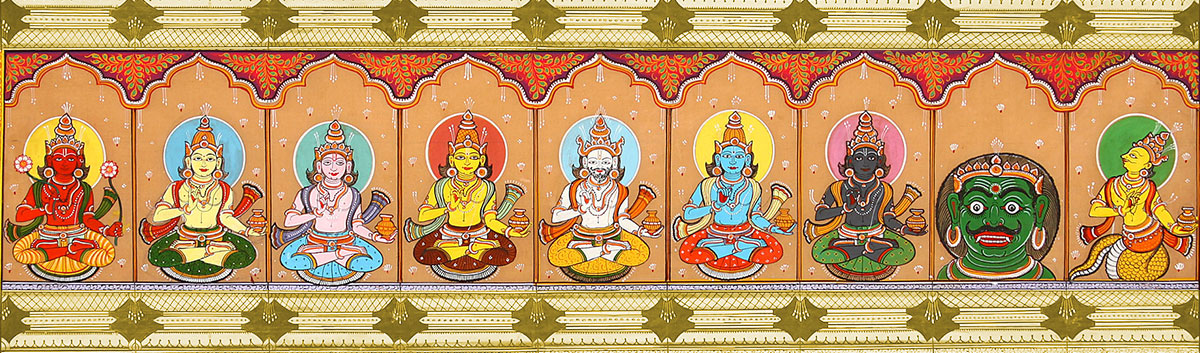
 Sagittarius Publications is the publisher and distributor the popular quaterly magazine the Jyotish Digest, as well as many thorough books on the subject of Vedic Astrology or Jyotish.
 We have an excellent pandit Divākar ‘Deva’ Mishra, who is from the priests of Vindhyāvāsini Siddha Pīṭha to guide you through the hundreds of temples of Kāśi [Varanasi] and neighbouring regions. He can organise your pūjā, keep you safe and take care. He is supported by an English-speaking well-travelled spouse ‘Supriya Mishra’. Please contact them directly for any services, remedial pūjā and tours. They handled the 60+ member Kāśi Jyotiṣa Group 2022.